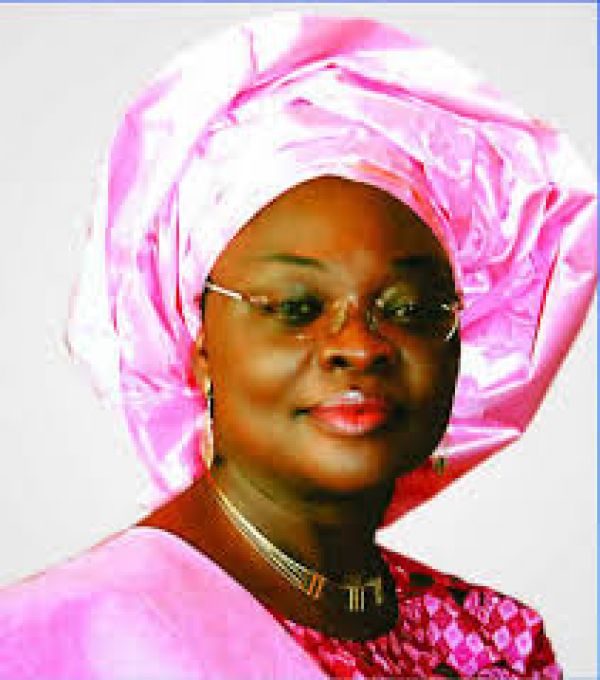
Tagging IPOB terrorist organization embarrassed Nigeria globally – Prof.
Nebo
A former Minister of Power, Prof. Chinedu Nebo, has joined other millions of
Nigerians in condemning the Federal Government for branding the Indigenous
People of Biafra (IPOB) a terrorist organisation.

He lamented that such tag truncated the global respect Nigeria had been
battling to redeem in the recent past.
Prof. Nebo spoke at the inaugural lecture series organised by the Institute
of Security Studies of the Department of State Services (DSS), in Abuja, on
Wednesday, expressing disappointment over the ranking of Nigeria highest among
the top terrorist countries in the world.
Delivering a lecture on the topic, “Leadership and Nigeria’s developmental
challenges”, Prof Nebo said: “Nigeria is popularly labeled as the giant of
Africa only in terms of population because all other indicators of a prosperous
and heathy nation don’t exist in Nigeria.
“In fact, according to Global Peace Index, Nigeria ranks top among the most
corrupt and most dangerous countries to live in Africa. It is also rated as one
of the most corruption endemic countries in the world.
“In addition, recent ranking of Nigeria in the Mo Ibrahim governance indices
is painfully worrisome. In terms of prosperity, economic dominance, life
expectancy and so on, Nigeria does not even make the list among the top ten in
Africa.
“Nigeria is also ranked highest among the top terrorist countries in the
world because of Boko Haram (third deadliest) and Fulani herdsmen (fourth
deadliest)terrorist organizations according to Global Terrorism Index – all
operating and resident in the northern Nigeria.
“To make matters worse, Nigeria recently branded IPOB a terrorist
organization, which means that by our win admission, Nigeria now houses three
terrorist organizations in the world, perhaps the only country to so qualify.
It is no virtue at all. Thus is a very dangerous record which is capable of
truncating the global respect Nigeria has been begging to redeem of recent,” he
said.
Speaking further, the former Vice Chancellor of University of Nigeria (UNN)
argued that the link holding the north and south is still very fragile,
declaring: “Nigeria is not yet a failed nation. But Nigerians should not hold
on to the erroneous notion that the nation is indissoluble and indivisible
without ensuring certain prerequisites as safety nets.”
“Fact is: the link between north and south Nigeria is still fragile and
sadly so 57 years after independence. When the northern youths issued a quit
notice and later suspended without withdrawing it, this fact became quite
obvious once more. In addition, the use of denigrating, insultive and
unprintable language by the leader of IPOB has made an already bad situation
much worse.
“The weak link between the regions of the country seems to be only economy.
Then I asked myself; if oil is found in commercial quantities in the northern
troughs and basins or crude oil suddenly loses its value in international
market, will north and south Nigeria still have enough motivation to continue
as one nation? This is a question that I would rather urge each and every one
of us to answer,” he said.
Narrowing leadership on the victory President Buhari recorded against
President Goodluck Jonathan, he argued that the ability of President Buhari
retaining power after 2019 Presidential election would depend on his
personality.
He continued, “In the absence of any known formula for prescribing the best
leadership for Nigeria, all that is left is the space to outline how the best
(exceptional leaders) can emerge, how the nation can minimize the chances of
toxic leaders emerging.
“From this postulation, you can easily see the nexus between people and
their leadership: the people partly form the situation and directly influence
the kind of leaders they get. If we use the 2015 general election again as an
example, it was the clamor of the Nigerian people for change that produced the
crest that Buhari rode on to get back to power.
“This interconnection also proves to a substantial extent the assertion that
the people get the kind of leaders they deserve or desire. Plato captured this
condition and leadership preponderance most beautifully when he said: “One of
the penalties for refusing to participate in politics is that you end up being
governed by your inferiors”.